
Why Off-Channel Communications Create Hidden Broker Dealer Risk
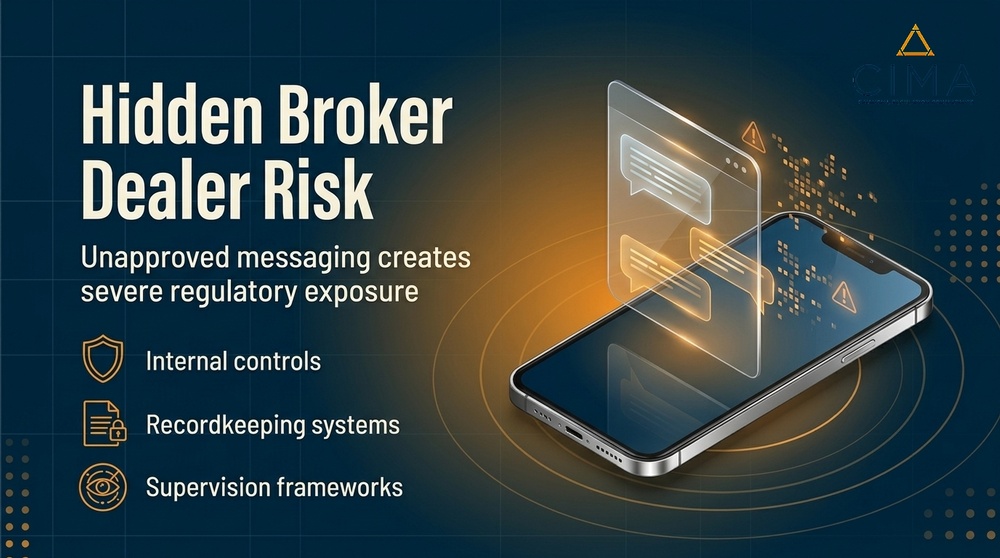
Unmonitored messaging channels represent one of the most persistent operational threats facing modern financial institutions. When your registered representatives send quick updates over personal text, chat applications, or social direct messages, your firm quietly drifts into significant regulatory jeopardy. Financial authorities require comprehensive surveillance, capture, and archiving of all communications relating to your business operations. When employees circumvent established firm systems, you lose immediate visibility into operational conduct, expose institutional accounts to evidentiary compromise, and trigger massive enforcement penalties.
The shift toward remote interaction, cross border business dealings, and mobile client relationships has accelerated these vulnerabilities. Your firm may maintain written supervisory procedures that outright prohibit business discussions on unapproved platforms, yet policies alone do not prevent deliberate or accidental violations. Without automated capture tools, persistent behavioral oversight, and rigorous independent reviews, personal devices turn into regulatory blind spots. Partnering with a specialized Financial consultant allows you to evaluate operational exposures before regulatory examiners discover unrecorded discussions.
Supervisory failures involving unauthorized communications lead to severe consequences. Regulatory agencies have imposed billions of dollars in fines on financial firms of every scale, penalizing weak oversight and incomplete record retention. Addressing this exposure requires a structural approach that integrates technological capture, executive discipline, and active oversight. Understanding how unrecorded exchanges occur, how they damage organizational integrity, and how to detect them will preserve your firm's market standing and balance sheet.
The Regulatory Foundation of Broker Dealer Supervision and Communication Archiving
Federal securities regulations require regulated firms to retain all correspondence, memoranda, and internal records relating to their business activities. Regulatory frameworks under the Securities Exchange Act, specifically Rules 17a-3 and 17a-4, establish clear mandates for book and record preservation. When your personnel conduct client discussions about market conditions, order executions, product recommendations, or operational matters on personal applications, your institution fails to preserve mandated documentation. Maintaining sound broker dealer supervision means you must actively control every digital conduit where business transactions occur.
Regulatory scrutiny extends beyond traditional email servers and approved office workstations. Oversight bodies evaluate whether your institutional controls keep pace with everyday workplace communication behaviors. Regulators examine whether supervisors review approved platforms consistently while remaining blind to parallel unapproved dialogues. When an informal text message clarifies a written client instruction, that unarchived text becomes an official business record. Failure to capture it constitutes a distinct compliance breach.
The enforcement trends established by regulators demonstrate zero tolerance for willful ignorance. Regulatory bodies issue civil money penalties, require firms to hire independent compliance monitors, and demand public admissions of operational failure. These consequences damage commercial credibility and trigger costly internal restructuring. Supervisors cannot claim that personal chats occurred outside business hours or without managerial consent, because supervisory accountability rests entirely on firm leadership.
To protect your firm, you must treat all written digital interactions as formal business records. Your policies must define what constitutes official communication, identify permitted systems, and establish explicit consequences for unauthorized conversations. Supervisory teams must be equipped with modern compliance surveillance tools rather than relying on honor systems. Proactive oversight preserves institutional transparency and prevents avoidable regulatory enforcement actions.
The Core Mechanisms of Hidden Operational Exposure
Unrecorded communications develop naturally out of workplace convenience. Clients frequently initiate contact through popular consumer chat apps, SMS, or private social media messages, expecting instant answers from their relationship managers. When your advisors prioritize speed over regulatory procedure, they create operational risks that accumulate silently over long periods. Consider how everyday interactions generate systematic vulnerabilities across your institution:
- Client Convenience Precedence: Registered representatives often answer incoming client inquiries on personal devices out of a desire to provide prompt customer service. Over time, these brief confirmations expand into full discussions regarding investment strategies, portfolio allocations, and fee negotiations that remain entirely outside your compliance archive.
- Subcontractor and Third-Party Messaging: Operations professionals often coordinate with external custodians, clearing firms, and referral partners via quick mobile chats. These external dialogues regularly contain sensitive client data, execution details, and non-public pricing that must be archived under institutional recordkeeping requirements.
- Ephemeral and Auto-Deleting Software: The adoption of private communication platforms with disappearing message capabilities creates extreme regulatory exposure. When your personnel discuss firm operations on applications engineered to erase evidence, supervisory agencies interpret this behavior as intentional evasion of supervision rather than mere informality.
- Cross Border Friction: Conducting business across international jurisdictions introduces diverse consumer messaging habits. International institutional clients often resist traditional corporate email in favor of direct mobile applications, tempting regional teams to bypass corporate servers to preserve client goodwill.
Each unmonitored exchange creates an incomplete record of your transactions. If a customer dispute arises concerning advice, trading authorization, or fee disclosures, your defense relies entirely on archived documentation. If essential parts of that dialogue occurred through an unmonitored personal account, your firm faces both regulatory discipline and evidentiary disadvantages in legal arbitration.
These communication gaps also disguise other forms of misconduct. Insider trading discussions, unauthorized customer guarantees, selling away from the firm, and undisclosed personal conflicts often happen over private mobile channels. By failing to stop unrecorded channels, your supervisory team permits high-risk misconduct to operate unchecked beneath legitimate corporate operations.
Structuring Practical Compliance Testing Procedures for Digital Records
Detecting unrecorded discussions requires structured surveillance rather than passive policy distribution. You cannot assume employees follow written guidelines without testing those behaviors against digital data. Establishing regular compliance testing procedures enables your risk department to identify indicators of off-channel communications before external examiners initiate formal inquiries.
Effective surveillance testing begins with thorough communication reconciliation. When reviewing corporate emails, compliance teams must inspect inbound and outbound message threads for missing context. When an employee replies to an email with references to a separate text or asks a client to call them on an unmonitored app, your review team must flag that event immediately. These breadcrumb references indicate that critical business information moved away from protected firm archives.
Your testing methodology must also include random mobile device audits alongside technical email evaluations. If your firm operates under a Bring Your Own Device arrangement, you must possess explicit contractual authority to inspect business records stored on those physical phones. Routine spot checks of device settings, data consumption figures, and installed messaging platforms will reveal whether employees use unauthorized tools for institutional business.
Testing programs must also analyze productivity and transaction patterns. If a top-producing desk completes high transaction volumes while generating virtually no inbound or outbound corporate email traffic, your supervisory personnel should investigate that anomaly. Business generation requires ongoing communication, and an absence of corporate email activity suggests that real dialogues are occurring elsewhere.
Executing an Exhaustive Internal Controls Evaluation
Protecting your firm requires an objective internal controls evaluation to detect systemic vulnerabilities across your supervisory architecture. Written policies are meaningless if your infrastructure lacks technical controls, clear escalation channels, and meaningful enforcement protocols. Evaluating your internal controls ensures that administrative requirements align with everyday operations.
Your internal review must analyze technological integration across every department. Assess whether your business units have access to approved, automatically archived mobile messaging solutions. Employees often adopt personal chat tools because corporate systems are clunky, slow, or difficult to use on mobile devices. Providing secure, archived business messaging tools helps satisfy client expectations while maintaining complete regulatory oversight.
You must also audit how your compliance team handles identified infractions. When a supervisor discovers an employee using personal text messaging for client updates, that incident must be documented and addressed with clear corrective action. If leadership ignores violations committed by high-producing personnel, it undermines the integrity of your compliance program and creates organizational liability.
Independent compliance experts provide valuable perspective during these assessments. Internal teams can become accustomed to organizational blind spots, whereas an outside evaluation brings fresh technical analysis. External reviewers benchmark your controls against current regulatory standards, identifying operational weaknesses before regulatory examiners conduct their own audits.
Remediation Roadmaps to Rectify Prior Recordkeeping Deficiencies
If your institution identifies historical or ongoing off-channel communication problems, you must implement immediate remediation measures. Ignoring existing record gaps compounds your legal liability. Regulators reward proactive self-reporting, self-correction, and structural remediation, while harshly punishing firms that conceal operational failures.
The first step in remediation is securing and cataloging missing records. When your firm identifies unarchived business messaging, your compliance personnel must supervise the export and preservation of those discussions into corporate repositories. Preserving these digital records halts data loss and demonstrates a commitment to institutional transparency.
Next, your leadership must execute mandatory, specialized training across every operational unit. Employees must understand that text messages, direct social communications, and private chat applications are subject to the same regulatory standards as formal letters or corporate emails. Training programs should clearly outline personal liability, potential termination policies, and regulatory licensing consequences for deliberate non-compliance.
Finally, your firm must update its supervisory framework with enhanced administrative accountability. Supervisors must formally attest to reviewing mobile logs and investigating communication red flags. Documenting these supervisory actions provides concrete proof to regulatory bodies that your firm maintains an active, functioning oversight system.
Building a Sustainable Supervisory Framework
Addressing unmonitored communications is an ongoing operational commitment rather than a one-time project. As digital platforms continue to change, your firm must adapt its compliance programs, monitoring technology, and employee oversight. Proactive compliance protects your corporate reputation and shields your enterprise from significant financial penalties.
Securing institutional resilience requires clear direction, thorough oversight systems, and continuous assessment. If you want to evaluate your firm's supervisory framework, upgrade your digital archiving safeguards, and eliminate communication vulnerabilities, you can arrange a confidential consultation by contacting information@cimafrc.com.